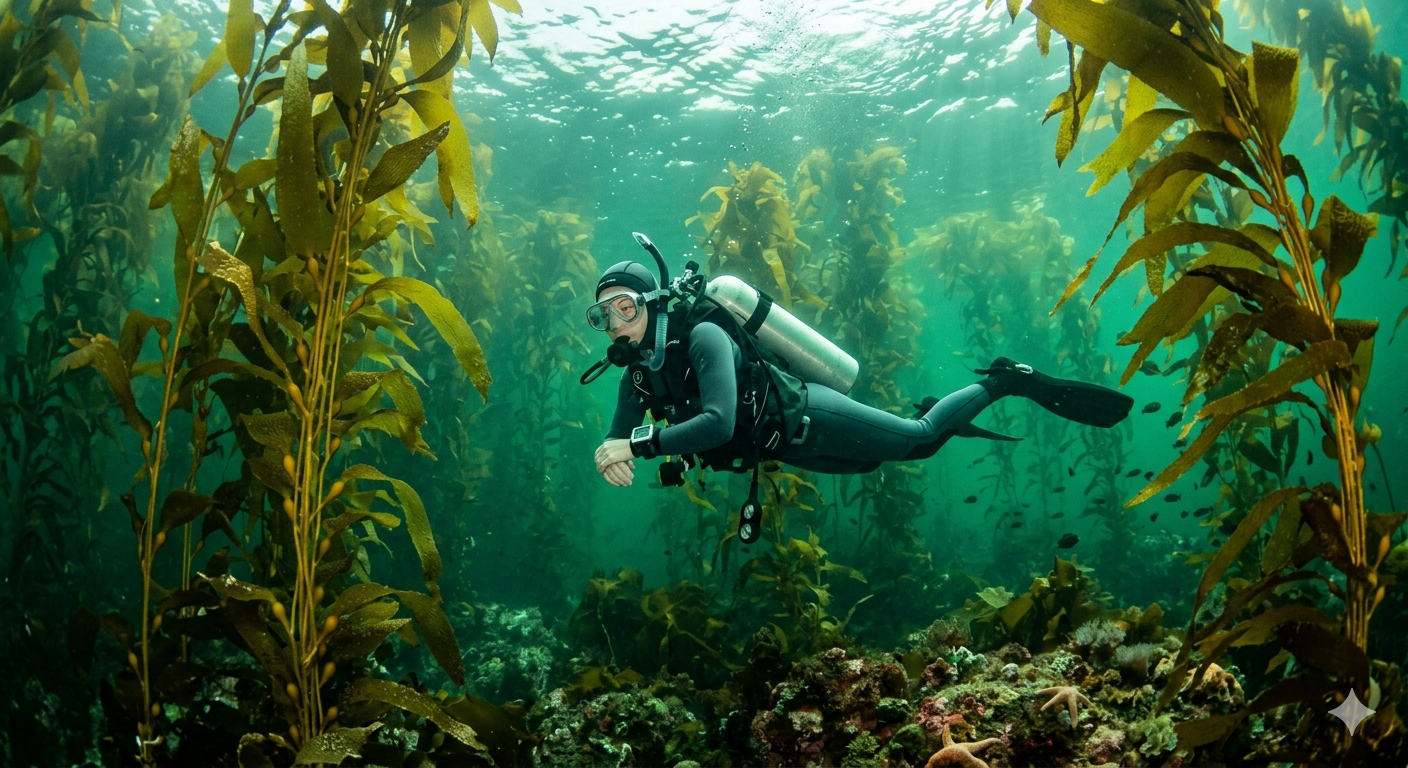
Struggling with buoyancy in kelp and surge? Learn weighting, breathing, and finning tips that help LA and Ventura County divers stay calm and in control.
Why Buoyancy Matters More in the Pacific
Good buoyancy keeps you off the bottom, out of the kelp canopy, and away from unnecessary exertion. California diving adds surge, thicker exposure protection, and variable visibility. New divers often fight the water instead of working with it. Small adjustments to weight, trim, and breathing make skills like mask clearing and regulator recovery much easier in real ocean conditions.
Weighting: Not Too Much, Not Too Little
Your goal is to descend smoothly with a normal breath and ascend slightly when you inhale at the end of a dive with a nearly empty tank. Too much weight makes you sink and forces constant inflation. Too little weight makes you struggle to descend and stay down in surge. Log what you used with each wetsuit thickness and ask your instructor to confirm at the end of training dives.
Breathe Like a Diver, Not a Sprinter
Slow, full breaths help your buoyancy control device do its job. Short, rapid breathing creates yo yo movement and wastes air. Practice relaxed breathing in the pool until it feels natural, then carry that rhythm into kelp. When surge moves you, breathe and fin gently rather than inflating and deflating your BCD repeatedly.
Trim and Body Position in Kelp
A horizontal posture with fins up reduces contact with the bottom and kelp fronds. Keep hoses clipped and consoles tucked. Look where you swim. Vertical or head down postures snag gear and stir sand. Your instructor can watch your profile during training and suggest small gear changes that improve balance underwater.
Finning Efficiently in Surge
Flutter kicks in tight spaces and frog kicks or modified kicks in silty or shallow areas help you move without kicking up debris. Avoid bicycle kicking. Match your effort to conditions. Fighting surge with hard kicking burns air and throws off buoyancy. Sometimes holding position and using the surge rhythm is smarter than constant travel.
Ascents, Safety Stops, and Kelp Overhead
Ascend slowly and look up for kelp and boat traffic. Use a controlled ascent rate and complete safety stops when your dive plan requires them. If kelp is overhead, ascend along a clear path your guide points out. Do not inflate rapidly to punch through fronds. Plan your exit with the briefing team before you drop in.
Common Beginner Mistakes
Holding your breath, overweighting after switching wetsuits, and dumping all your air when nervous are frequent issues. Another is relying only on the BCD instead of breath control in the top few feet. Practice skills until they are automatic so your brain can focus on navigation and buddy awareness in greener water.
Practice Locally Before Big Trips
Logging dives in Los Angeles and Ventura County builds kelp comfort faster than one tropical trip per year. Each dive reinforces weighting and breathing with local gear and conditions. When you later dive Catalina or travel elsewhere, those hours pay off in calmer movement and better air consumption.
Train With Scuba Life Instructors
Buoyancy is taught in every quality course but only sticks with repetition and feedback. Scuba Life focuses on real Pacific conditions during training and follow up dives. Browse courses at scubalife.net or call 714-728-2300 to schedule training, refreshers, or guided dives that target buoyancy and confidence in kelp.