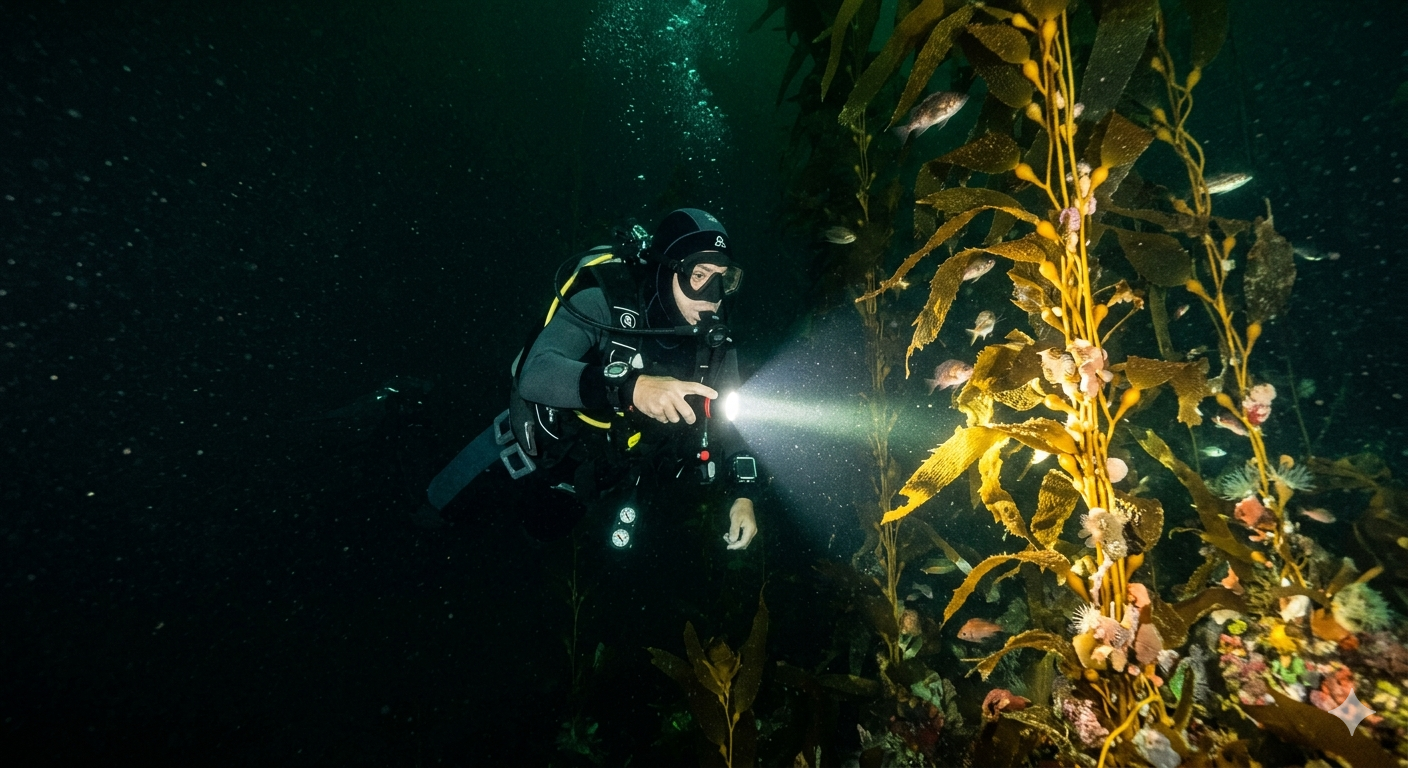
Curious about night dives off LA or Ventura County? Learn gear, briefings, marine life, and safety tips for your first after dark dive in Pacific water
Why Divers Love Night Dives
The same reef or kelp forest feels completely different after sunset. Daytime fish settle in, nocturnal creatures emerge, and your focus narrows to what your light reveals. Night diving in Southern California is popular with experienced locals and specialty students. It requires extra planning and calm habits, but many divers say their first night dive was the moment the ocean felt truly new again.
Prerequisites and Training
You should be comfortable with buoyancy, navigation, and basic skills in daylight before adding darkness. Many divers take a Night Adventure Dive or Night Diver specialty as part of continuing education. Training covers light handling, buddy contact, entry and exit in low visibility, and communication. Scuba Life schedules night training when conditions and student readiness align.
Lights: Primary, Backup, and Surface
Carry a reliable primary dive light and a smaller backup attached to your gear. Test batteries and seals before you leave home. A surface marker light or chemical light on your tank helps boat crews spot you. Never dive at night with a single light and no backup. Know how to stow lights during entries so you do not blind your buddy or boat crew.
Briefings and Site Familiarity
Night dives work best at sites you know from day dives or with a guide who knows the layout. Briefings cover entry timing, depth limits, turnaround pressure, and what to do if you lose your buddy or light. Shore entries need extra care for waves and footing. Boat dives require clear surface protocols and account procedures when divers return in the dark.
Navigation and Buddy Discipline
Distance and direction feel different at night. Stay closer to your buddy than on a typical day dive. Use natural navigation when possible and agree on turn points before you descend. Avoid long swims away from the entry or ascent line. If you become disoriented, stop, signal your buddy, and ascend slowly with control rather than racing in an unknown direction.
Marine Life After Dark
You may see lobsters, octopus, sleeping fish, and invertebrates that hide by day. Move slowly and avoid shining lights directly into animals eyes for long periods. Photography is harder at night. Buoyancy matters even more when you are distracted by beam patterns in the water. Enjoy observation without touching or harassing wildlife.
Common First Night Dive Mistakes
Rushing the briefing, poor weight checks with a thicker suit, and wandering far from the group top the list. Another is panicking when the light beam shows particulate in the water. That is normal. Breathe, stay with your buddy, and trust your training. Do not attempt a first night dive in heavy surge or unfamiliar offshore conditions.
When to Say Not Tonight
Strong swell, poor visibility, equipment issues, or fatigue are reasons to postpone. Night diving rewards patience. A canceled dive beats an incident. Instructors and captains may scrub dives when conditions are unsafe. Respect that call and reschedule when the ocean and your gear are ready.
Add Night Diving to Your SoCal Journey
From Open Water through specialties and guided local dives, Scuba Life helps California divers build skills step by step. Ask about night training, required gear, and upcoming dates in Los Angeles and Ventura County. Visit scubalife.net or call 714-728-2300 to plan your first night dive with instructors who know Pacific conditions after dark.