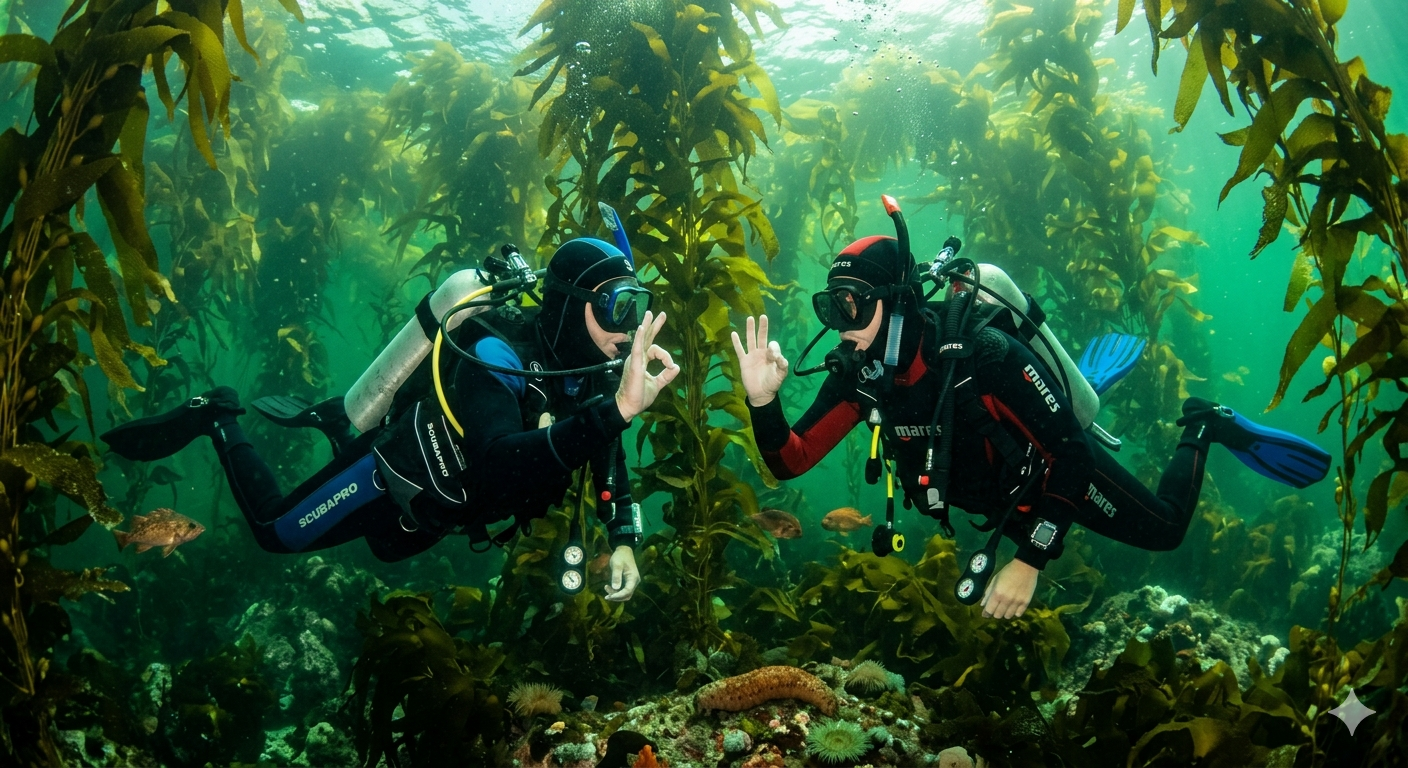
Strong buddy habits and simple safety routines keep SoCal dives safer. Learn planning, communication, and emergency basics for LA and Ventura County diving.
Safety Starts Before You Touch the Water
Most dive incidents are prevented on the surface. Good safety is a habit built from planning, honest health disclosures, and clear communication with your buddy and crew. Southern California adds factors like cooler water, surge, and kelp that reward prepared divers. Treat every dive day as a team effort, not a solo adventure.
Plan the Dive and Dive the Plan
Know maximum depth, bottom time, entry and exit points, and what to do if you separate from your buddy. Listen to the captain or site briefing. Ask questions if current, visibility, or boat procedures are unclear. Write or remember turn pressure and time limits. A simple plan shared between buddies prevents guesswork underwater.
Buddy Checks That Actually Matter
Before you enter, confirm air is on, regulators breathe, BCD inflates and deflates, weights are secure, and releases work. Review hand signals and who leads navigation. Exchange emergency contacts and surface signals if boat diving. A rushed check is how small problems become big ones ten minutes into a dive.
Stay Close and Stay Aware
Your buddy is your backup eyes and air support. In limited visibility, stay within a few seconds of travel distance. Check each other regularly. If one diver stops to look at something, the other should stop and wait. Chasing marine life alone is a common way buddies lose each other in kelp.
Air Management and Turn Pressure
Agree on a turn pressure before you descend and stick to it with margin for ascent and safety stops. The diver with higher consumption often sets the pace. Monitor your gauge often without fixating on it. Surfacing with plenty of reserve is a sign of good planning, not wasted air.
Ascents, Stops, and Surface Protocol
Ascend slowly and signal your buddy. Complete required safety stops when your plan calls for them. At the surface, inflate for positive buoyancy, establish contact with the boat if applicable, and account for all divers in your group. Do not remove your mask or regulator until you are stable and the crew expects you.
When Something Feels Wrong, Speak Up
Ear discomfort, anxiety, equipment issues, or fatigue are valid reasons to end or shorten a dive. Signaling early protects everyone. Instructors and guides prefer an honest abort over a problem at depth. There is no shame in sitting out a dive to fix gear or rest.
Training That Builds Real Readiness
Open Water teaches foundations. Rescue and refresher courses sharpen prevention and assistance skills. Continuing education reinforces navigation, deep planning, and stress management. Scuba Life builds safety culture into courses and trips so divers leave training with habits that work in Pacific conditions, not just pool calm.
Dive Safer With Scuba Life
Whether you are new or returning after a break, invest in briefings, buddy discipline, and courses that match your experience. Browse training and trips at scubalife.net or call 714-728-2300 to ask about refreshers, rescue training, and guided dives with instructors who prioritize safety first and fun second.