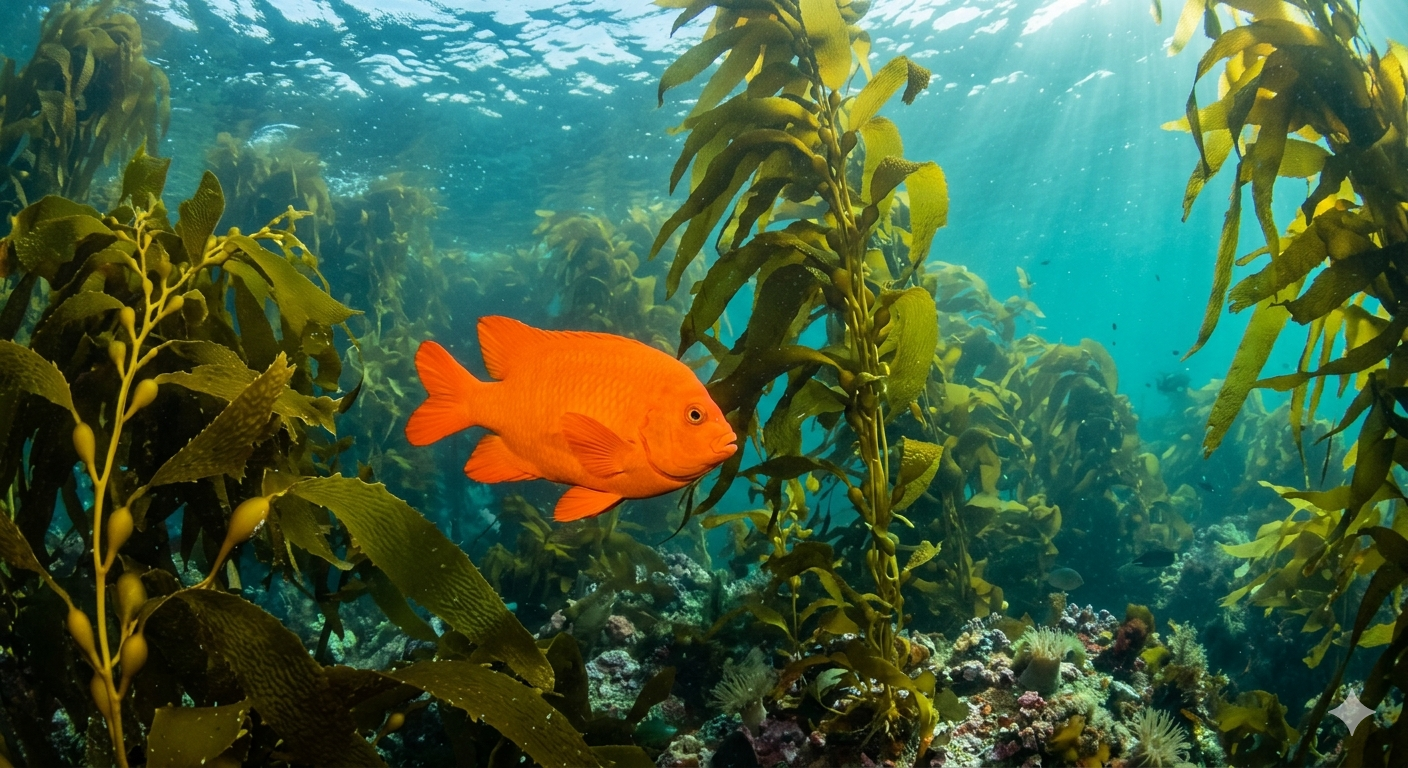
From garibaldi to horn sharks and kelp forests, see what lives off the LA and Ventura County coast and how to enjoy wildlife dives responsibly with Scuba Life.
The Pacific Is Not Empty, It Is Different
New divers sometimes expect tropical reefs and are surprised by green water and kelp instead of coral. Southern California hosts a rich mix of fish, invertebrates, and seasonal visitors. Learning what is common, what is protected, and what changes by month makes every dive more interesting. You do not need perfect visibility to have a great wildlife dive if you slow down and look closely.
Garibaldi and Other Reef Residents
The garibaldi is the bright orange state marine fish many divers remember first. Juveniles show blue spots and adults defend territories near rocky structure. You may also see senorita fish, blacksmith, halfmoon, and various perch species weaving through kelp. Rock crevices hide lobsters, moray eels, and small crabs. Move calmly and avoid chasing fish for photos. Patient hovering gets better behavior and safer dives.
Kelp Forests as Habitat
Giant kelp creates a vertical habitat from the bottom toward the surface. Light filters through fronds and attracts bait fish, which attract predators. Sea hares, nudibranchs, and small shrimp live on and around the holdfast zone. Kelp also means you must manage your gear so hoses and consoles do not snag. Wildlife and environment go together here. Respect both.
Horn Sharks, Rays, and Bottom Dwellers
Horn sharks are a favorite find for many local divers. They are often resting under ledges or in sandy patches near structure. Bat rays and other rays appear seasonally and by site. Always give bottom animals space and never block their exit path. Touching or harassing wildlife stresses animals and can injure you. Observe, do not interfere.
Seasonal Visitors and Luck Days
Some species show up in predictable seasons. Others are occasional treats on a lucky dive. Dolphins, sea lions, and pelagic fish may appear on boat dives or crossings to islands. Even mainland sites can surprise you after years of diving the same cove. Keep expectations flexible. A quiet dive with clear skills beats chasing animals and burning air.
Protected Species and Local Rules
California has marine protected areas and species with special status. Garibaldi are protected. Lobster and other take species have seasons and rules even for licensed harvesters. As a diver, assume look only unless you are trained and permitted for specific activities. Follow briefings from captains and instructors. Ignorance is not an excuse on the water.
Photography Without Harm
Underwater photos are popular, but poor buoyancy and chasing subjects damage habitat. Practice buoyancy before you add a camera. Use a reef stick only if trained and allowed on that site. Turn off focus lights when not shooting. The best images come from steady positioning and waiting for natural behavior rather than crowding animals.
Teaching New Divers to Appreciate Local Life
Scuba Life instructors use local species in briefings so students connect training to real ocean dives. Naming a garibaldi or pointing out a nudibranch builds excitement and respect. When students understand what they are seeing, they care more about clean entries, proper weighting, and protecting the places they will dive for years.
See It Yourself on a Local or Catalina Dive
The best way to learn Southern California marine life is to dive often with knowledgeable guides. Join training, fun dives, or a Catalina weekend through Scuba Life. Browse trips and courses at scubalife.net or call 714-728-2300 to plan your next dive where garibaldi, kelp, and Pacific surprises are waiting.